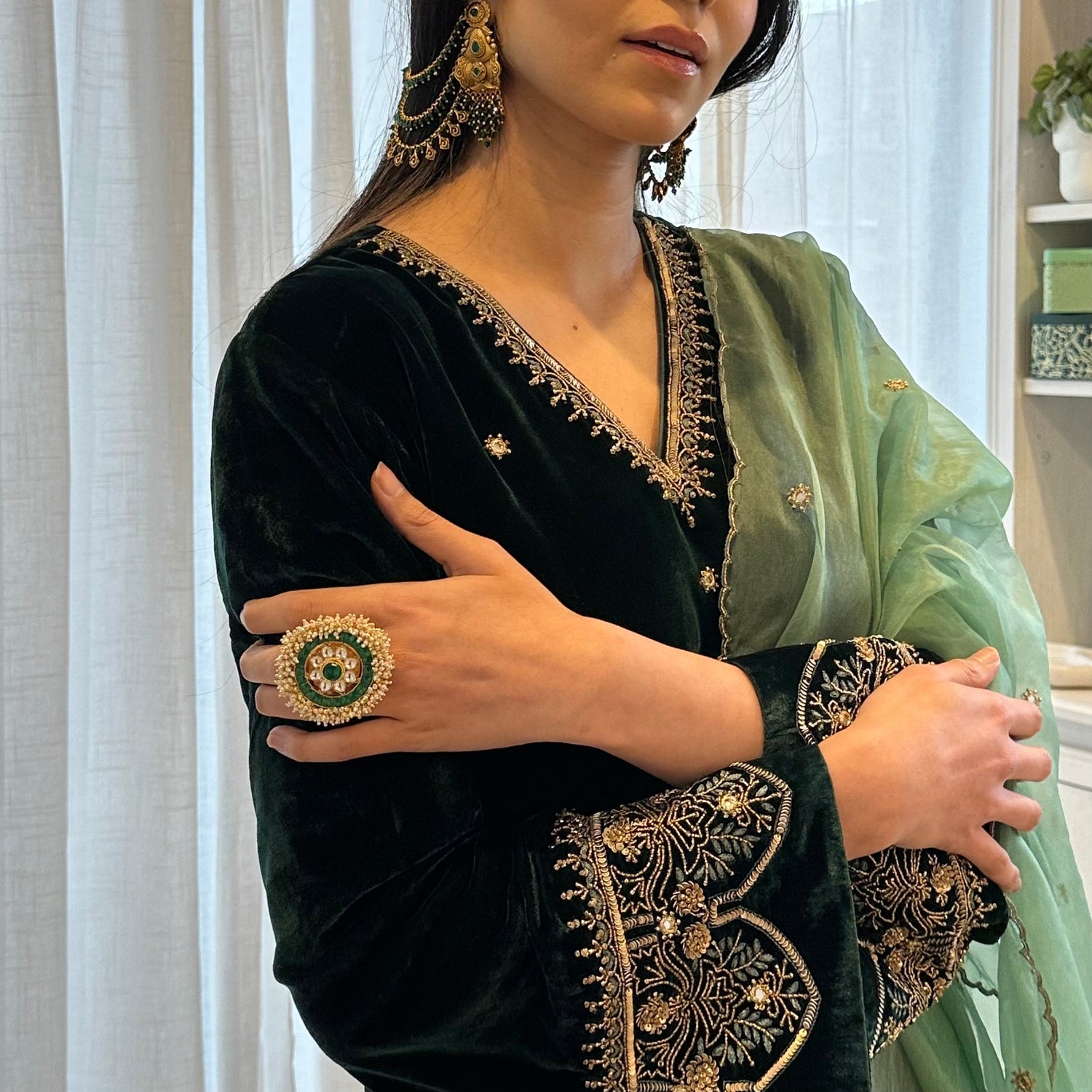


Indian Jewellery Types: Kundan, Polki & More Explained
Indian jewellery names can describe a setting technique, a stone, a decorative finish or simply a shape. Knowing which is which makes shopping easier: a choker tells you where a necklace sits, while a kundan-inspired design does not, by itself, establish the metal or stone used.
This guide explains common terms and how to choose a piece for your wardrobe. For any individual item, use its product description and ask about missing material details before purchasing.
Find your styling guide
- Jewellery for saree necklines: six easy pairings
- Indian wedding guest jewellery: what to wear
- Five ways to style handmade statement jewellery
Kundan and polki: technique versus stone
In its field report on Jaipur jewellery, the Gemological Institute of America (GIA) describes traditional kundan as a method of securing gems with metal foil, typically thin 24-karat gold. The same report describes polki diamonds as flat uncut diamonds, or diamonds cut to look flat, used in kundan settings. The terms can therefore appear together: they are not necessarily competing categories.
That describes traditional fine jewellery. A fashion-jewellery listing using “kundan-inspired” or “polki-style” may use different materials to create a related appearance. Do not assume a piece contains natural diamonds or high-karat gold unless its specification confirms that. Ask what the stones, base metal and finish actually are.
Meenakari: look for enamel detail
Enamel brings colour to jewellery, and GIA documents colourful enamel alongside kundan work in Jaipur's traditional jewellery. When comparing pieces online, look at the back as well as the front if photographs are available. A decorative finish and a gemstone description answer different questions; one does not establish the other.
Chokers, layered necklaces and matching sets
These names describe format rather than precious materials. A choker sits close to the neck; a layered design creates several lines; a set combines coordinated pieces. The word “set” does not tell you precisely what is included, so check the description and photographs.

For an open blouse neckline, try a choker with space between the necklace and the fabric. With a high or elaborately decorated neckline, consider earrings first. Our neckline guide shows how to compare the options.
Jhumkas and statement earrings
Jhumka commonly describes a bell-shaped earring. “Statement” describes visual impact, not a particular material or weight. Check the drop length, width, fastening and weight rather than assuming large earrings will be heavy or small ones will suit every wearer.
The Joelle earrings are described in our catalogue as jhumkas. You can also browse the wider earrings collection and compare shapes before deciding whether you want a necklace alongside them.
Handmade and embroidered jewellery
Handmade describes how an item is made; it does not automatically mean solid gold, natural gemstones or hypoallergenic components. Embroidered pieces can bring colour and texture to an outfit in a different way from stone-set designs.
Our Matsya necklace and earrings and Pari earrings are examples of embroidered designs in the handmade collection. See the handmade styling guide for shirt, dress and saree combinations.
Pearls and pearl-like beads are not interchangeable descriptions
A listing should distinguish natural or cultured pearls from imitation pearls or pearl-like beads. GIA places pearl at 2.5 on the Mohs hardness scale and advises against ultrasonic or steam cleaning for pearls. Those facts apply to pearls; they do not identify the material in a pearl-look fashion piece.
Cleaning should follow the actual materials and construction. If a piece combines thread, coatings, adhesive or several materials, ask the seller before soaking it or applying a cleaning product.
A practical buying checklist
- Choose the format: necklace, earrings or coordinated set.
- Check materials: separate style language from confirmed metal and stone information.
- Check fit: confirm dimensions, adjustable range and fastening.
- Check contents: establish which photographed pieces are included.
- Check timing and policy: read delivery and returns details before an event purchase.
Start with necklace sets and chokers for an open neckline, or use our wedding guest guide to plan several outfits around a small selection of pieces.
Sources and editorial notes
Traditional technique and gemstone information: GIA's Jaipur jewellery field report and GIA's Pearl Care and Cleaning Guide. These sources explain materials and techniques; they do not certify or endorse the Chaandbali products pictured here.
Updated 26 September 2026 by Chaandbali. Styling suggestions are editorial recommendations. Product details and availability are shown on individual listings.